

Wedding Catering
Nikah, walima, shaadi and reception menus for the whole family.

What our kitchens cook, and how we build a menu around your event.
A catering menu is a conversation, not a fixed list. The dishes below are what our two restaurant kitchens in Medchal and Yousufguda cook regularly, so they are dishes we can cook well for a crowd. We start there, ask who your guests are, and shape the menu around the occasion, the time of day and the balance of vegetarian and non-vegetarian guests.
Most Hyderabad menus follow a shape: a few starters, a biryani or rice dish, two or three curries, breads, a salad and raita, and one or two desserts. We adjust the number of dishes to the length of the event and the size of the crowd, because a menu that is too long slows the line and wastes food. Tell us your date and guest count and we will suggest a menu, with a tasting. See also ourfull catering services and ourbuffet catering for how the menu is served.
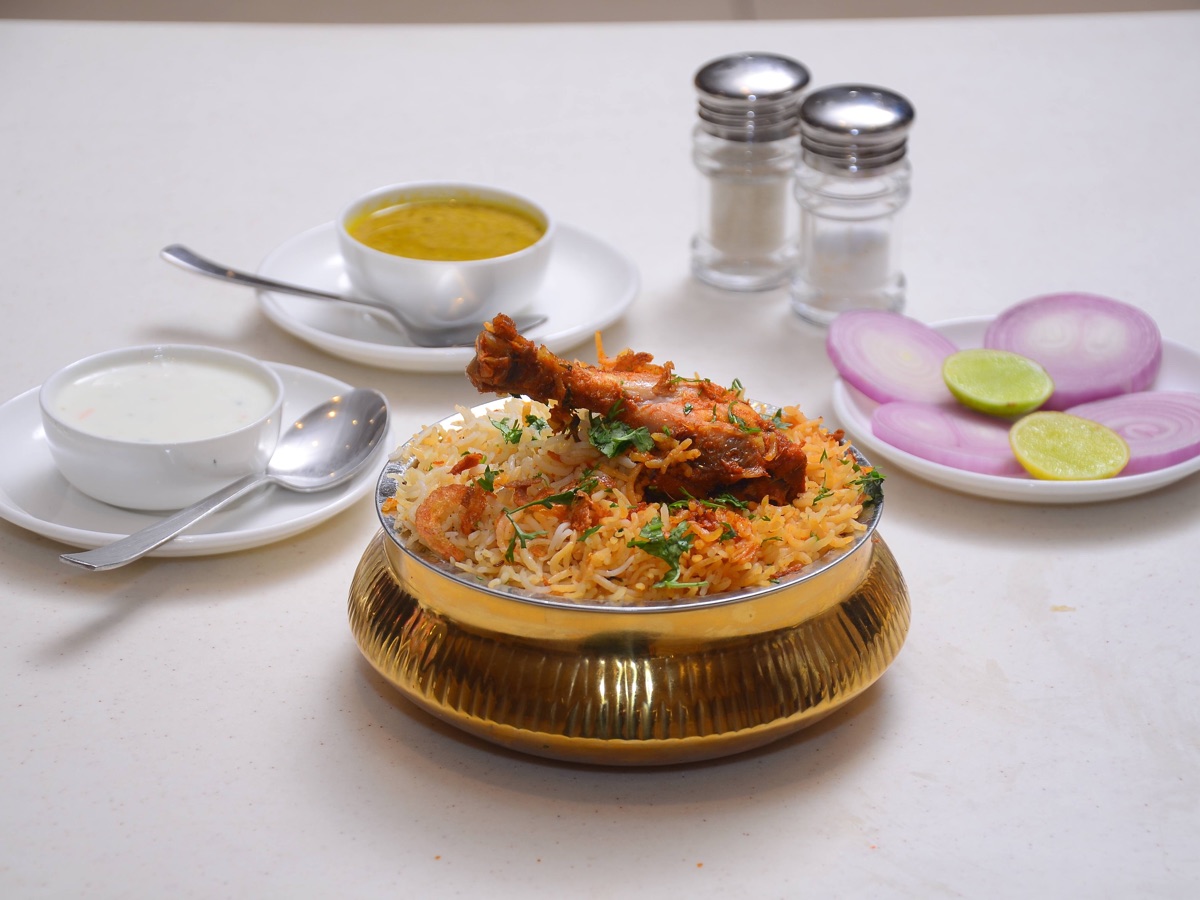
Our signature
Hyderabad judges a caterer by its biryani, and biryani catering is where we feel most at home. Our dum biryani is cooked with the rice and meat layered together and the pot sealed, so steam and aroma stay inside until it is opened at the table or the buffet. It is the same method our Medchal and Yousufguda kitchens use for walk-in diners.
We cook mutton biryani, chicken biryani and vegetarian biryani for weddings, corporate lunches and family functions. If you only need the biryani and not a full catering service, that is possible too: tell us the headcount and the delivery address, and we will say plainly whether a bulk order or a catering booking fits better.
Biryani catering Hyderabad
The word gets used loosely. Here is what it asks of a kitchen, step by step.
Mutton, chicken or vegetable, the method is the same: the cooking happens inside a closed pot. That is also why biryani cannot be rushed or held for long, and why we plan transport and serving time around it.
Meat is marinated in yoghurt and spices well before it meets any rice. A biryani is only as good as this step, and it cannot be done in a hurry on the morning of the event.
Basmati is boiled only until it is nearly done, so that the steam inside the pot can finish it. Rice cooked through at this stage turns soft and sticky in the handi.
Rice and meat go into the handi in layers, with fried onion, herbs and saffron milk between them. The lid is then sealed with dough or cloth so that no steam escapes. This is the dum.
The sealed handi cooks gently in its own steam. The meat finishes tender and the rice takes on the flavour of what sits beneath it. Nobody opens the lid to check.
The seal is broken at the table or the buffet, and the biryani is served from the handi. If it must travel, the seal is what keeps it hot and the layers intact.
Hyderabadi biryani is cooked two ways. In kacchi, the marinated raw meat goes under the part-cooked rice and cooks in the sealed pot. In pakki, the meat is cooked first and then layered with the rice. Families have strong views on which is right. Tell us yours when you ask for a menu, and we will say plainly how we would cook it for your guests.
On the plate, biryani is never alone: mirchi ka salan and raita come with it, and that is how we plan the serving lines, so that the salan is not an afterthought at the far end of the buffet.
The dishes behind a typical Hyderabadi menu. Nothing here is a fixed package.

A vegetarian menu should be planned for its own sake. We cook vegetarian dishes in a separate area with their own utensils, so vegetarian guests and Jain or strict-vegetarian families can eat with confidence.
A typical vegetarian table has two starters such as paneer tikka and hara bhara kebab, a vegetable biryani or pulao, paneer butter masala, a mixed vegetable curry, dal tadka, breads, raita and a dessert. For mixed-tradition weddings, we often run the vegetarian line as a mirror of the non-vegetarian one, so the two sides of the room move at the same speed.

Pricing
Each tier adds dishes and premium ingredients. A biryani-and-one-curry menu is priced differently from a full multi-course spread with mutton, seafood and a dessert station.
Larger numbers bring down the cost per plate, but the total rises, and cooking capacity and staffing must scale with it.
Mutton and seafood cost more than chicken, and chicken more than vegetarian dishes. The split between the three is the single biggest lever on a menu.
Buffet, plated and live-counter service need different numbers of staff and equipment, which affects the price per plate.
Transport to the venue and peak-date demand both appear on the quotation as separate items.
Questions
Yes. If you want biryani for a gathering without staff, counters or crockery, tell us the headcount and the delivery address and we will say whether it is best handled as a bulk order from our Medchal or Yousufguda kitchen or as a full catering booking.
We do not publish a fixed price list, because the price per plate depends on your guest count, menu tier, distance, staff and season. Message us with those details and you will get an itemised quotation that shows the price of each menu line.
Yes, and most menus do. We cook and serve the two sides separately, with their own utensils and staff, and label every dish.
Yes. The lists on this page show what our kitchens cook regularly, not a fixed package. Tell us your favourites, your dietary restrictions and your budget, and we will build the menu around them, with a tasting before you confirm.
Pairs well with
Nikah, walima, shaadi and reception menus for the whole family.

Chaat, dosa and grill cooked in front of your guests.
More in this section
Message us and you will have an itemised quote within two hours, any day between 9am and 9pm.